

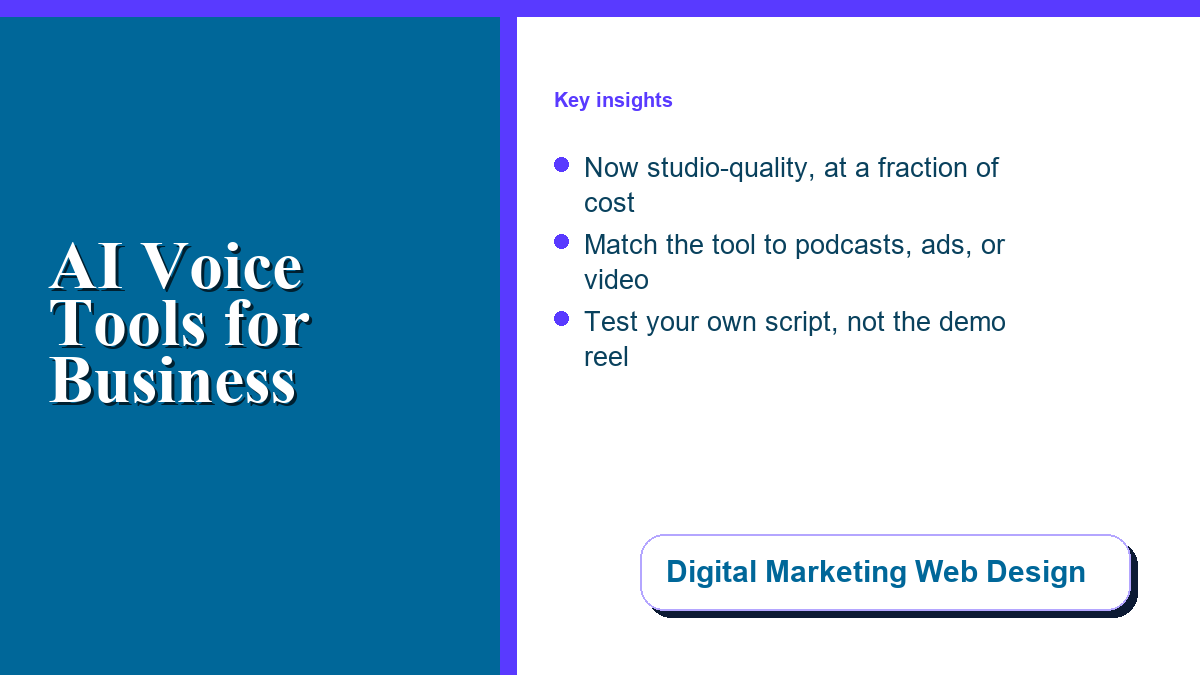
AI voice generation crossed a real threshold in 2026: the output is now genuinely hard to distinguish from a professional studio recording, at a fraction of the cost and turnaround time. For a small business producing podcasts, video narration, or ad voiceover, that changes the math on whether to book studio time at all.
Table of Contents
What These Tools Actually Do Well Now
The newest AI voice models produce expressive, emotionally aware speech — natural pacing, breathing, and the small vocal shifts that used to be the giveaway a voice was synthetic. That quality jump is what moved AI voice from “usable for background narration” to “usable for content people are actually meant to pay attention to,” including brand videos and ad reads where voice quality was previously a hard line separating a professional result from an obviously cheap one.
Matching the Tool to the Use Case
- Podcasts and long-form audio: tools optimized for sustained natural pacing over an hour-plus runtime matter more here than raw voice variety.
- Business voiceover and e-learning: a large, professional-sounding voice library across multiple languages covers most corporate use cases without needing a specialty tool.
- Ads and social video: speed and volume matter more than depth — the ability to generate many short variations quickly beats a smaller set of highly polished options.
- Fine control over delivery: some tools let you adjust emotion, pacing, and emphasis directly rather than accepting a single default read, which matters for anything where tone is doing real work.
Where This Extends Beyond Narration
The same underlying voice technology that handles narration now increasingly powers something adjacent: a spoken interface for an AI assistant itself, not just pre-recorded content. Charigent’s Voice AI feature is built around that use case specifically — letting a Charigent speak in real time rather than only generating a pre-recorded voiceover file, which is a genuinely different application from the narration tools above even though the underlying speech technology is closely related.
What to Test Before Committing
Every tool sounds impressive in a demo reel built from its best output. The real test is your own script, read by the specific voice you’d actually use in production — names, numbers, and brand terms are where AI voice tools most often stumble, and a demo reel is curated specifically to avoid exposing that. Run your actual content through before signing up for an annual plan.
The Practical Takeaway
AI voice tools have gotten good enough that “we’ll just do it ourselves cheaply” and “professional quality” are no longer opposites the way they were even two years ago — for narration specifically, the gap has mostly closed. The variance that remains is between tools, not between AI and human narration generally, which makes testing your own content before committing the actual decision that matters.
For a closer look at how far AI voice narration has come in a specific, demanding use case — matching tone and delivery to an established character rather than reading generic copy — see our piece on how voice narrator AI brings storytelling to life, which covers the same underlying technology applied to a much more specific narration challenge than most business use cases require.