

Most small teams answer the same handful of questions over and over — where’s the current logo file, what’s the refund policy exactly, how does the onboarding checklist go — through whichever channel happens to be open at the moment: a Slack DM, a group text, a hallway conversation nobody writes down. That works fine at three people. It quietly stops working well before anyone decides to fix it.
Table of Contents
The Signal Most Teams Miss
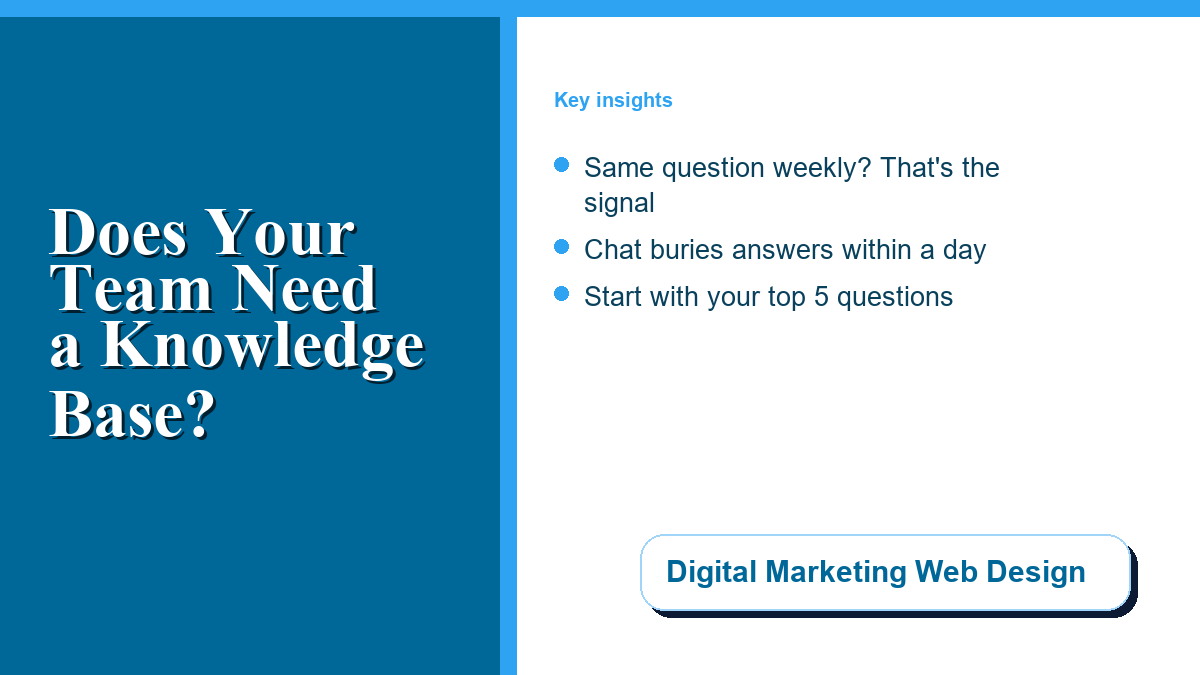
The tell is not team size, it’s repetition: if the same question gets asked more than once a week by different people, that answer belongs somewhere searchable, not buried in a chat thread from six weeks ago that nobody can find again. A knowledge base isn’t about scale, it’s about stopping the same answer from being retyped from memory every time someone new asks.
Why Chat Alone Is the Wrong Home for Answers
Chat is built for conversation, not reference — a good answer given in a busy channel is functionally gone within a day, buried under everything that came after it. Tools built specifically to bridge this gap let a question asked in chat get turned into a permanent knowledge base article on the spot, so the answer survives past the moment someone needed it, instead of requiring the same explanation the next time someone asks.
What Actually Matters When Choosing a Tool
- Findability over structure. A beautifully organized wiki nobody can search fast enough beats a messy one with instant, accurate search — in the wrong order.
- Low friction to add an answer. If documenting something takes longer than just answering the question again next time, most teams will keep re-answering it.
- Freshness signals. The strongest 2026 tools flag content that has gone stale rather than letting outdated answers sit indefinitely next to current ones with equal authority.
AI-driven knowledge bases have moved this further in the last year specifically: a system that can answer a question directly from your documentation, with a citation back to the source article, removes even the search step — the person asking gets an answer, not a list of articles to read themselves. Charigent’s AI knowledge base use case is built around exactly that model.
Starting Small on Purpose
The mistake most teams make when they finally commit to a knowledge base is trying to document everything at once. Start with the five questions asked most often in the last month, write those five answers well, and let the rest of the knowledge base grow from real repeated questions rather than a guess at what might eventually matter. For a broader look at how this fits into a team’s overall communication setup, see our guide to internal social networks for companies, which covers the wider category a knowledge base sits inside.