

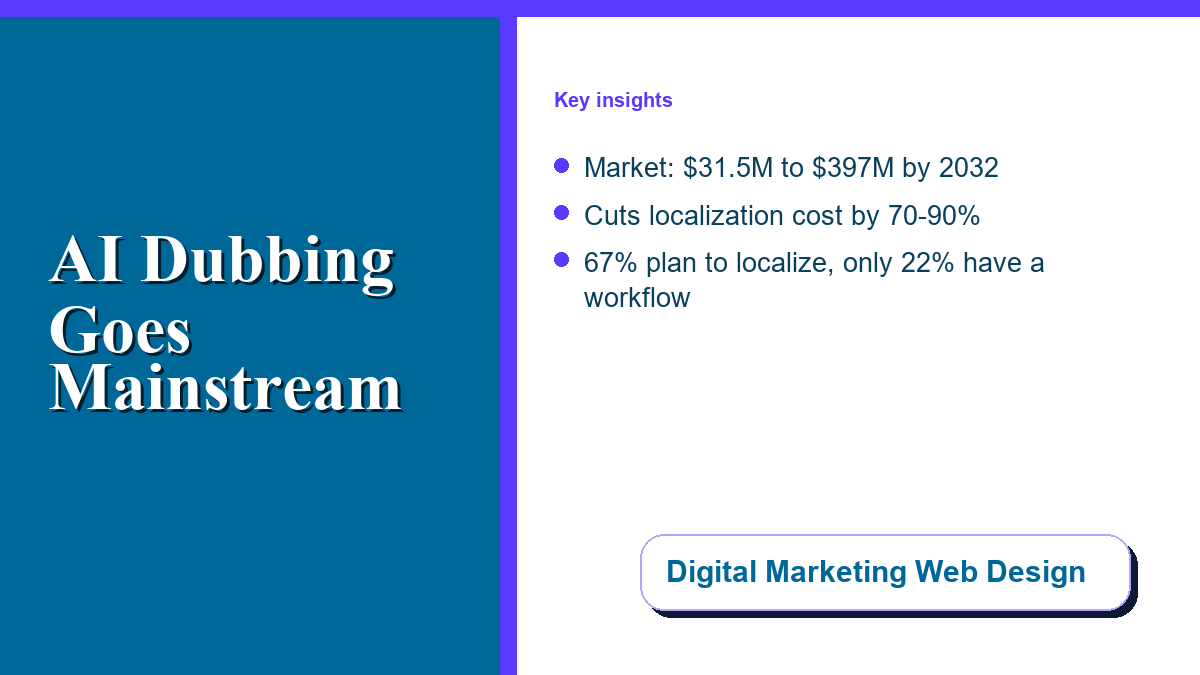
AI dubbing crossed from novelty to real industry infrastructure faster than most businesses noticed. The global AI video dubbing market is projected to grow from roughly $31.5 million to $397 million by 2032 — a 44% annual growth rate — and the reason isn’t hype, it’s that localization that used to take weeks now takes days at a fraction of the cost.
Table of Contents
The Numbers That Explain the Shift
AI dubbing is cutting localization costs by roughly 70–90% compared to traditional voice-actor-and-studio workflows, while compressing timelines from weeks to days. For a business producing video content in only one language, that math changes what “localize this for other markets” actually costs to attempt — a project that used to require a real budget line is now within reach for a much smaller content operation.
Where the Technology Is Headed
The industry is moving from post-production dubbing toward real-time translation — live-stream platforms are building native language selection so a speaker’s voice gets translated and synthesized as they talk, not edited in afterward. The underlying pipeline — speech recognition, neural translation, and voice synthesis working together to preserve the original speaker’s tone and rhythm across languages — is the same technology stack behind narration tools generally, just aimed at translation instead of language-preserving narration.
The Adoption Gap Worth Knowing About
67% of marketing teams plan to localize video content in the next year, but only 22% currently have an actual localization workflow in place — a real gap between intent and infrastructure that AI dubbing tools are specifically built to close. A business that builds even a basic localization workflow now is ahead of most of its competitors, who are still planning to get to it.
Voice Quality Is the Deciding Factor, Not Translation Accuracy
Translation accuracy solved itself first; voice quality was the harder problem, and it’s the one that determines whether dubbed content feels professional or obviously synthetic. The tools preserving a speaker’s actual tone, pacing, and emotional delivery across languages — not just translating the words — are the ones producing content people will actually watch instead of noticing was dubbed. That same voice-quality bar shows up in narration work generally, including the kind of character-specific voice work covered in our piece on how voice narrator AI brings storytelling to life.
What This Means for a Small Business
A business does not need to localize into ten languages to benefit from this shift — even a single additional language, done well, reaches an audience segment most competitors in the same niche are not bothering to serve yet. The cost barrier that used to make this decision easy to defer has mostly disappeared.