

The mascot is having a real comeback, and this time it can talk back. Businesses are shifting from static logos to interactive brand characters that respond, remember returning customers, and show up in a conversation instead of just a corner of the packaging.
Table of Contents
The Numbers Behind the Trend
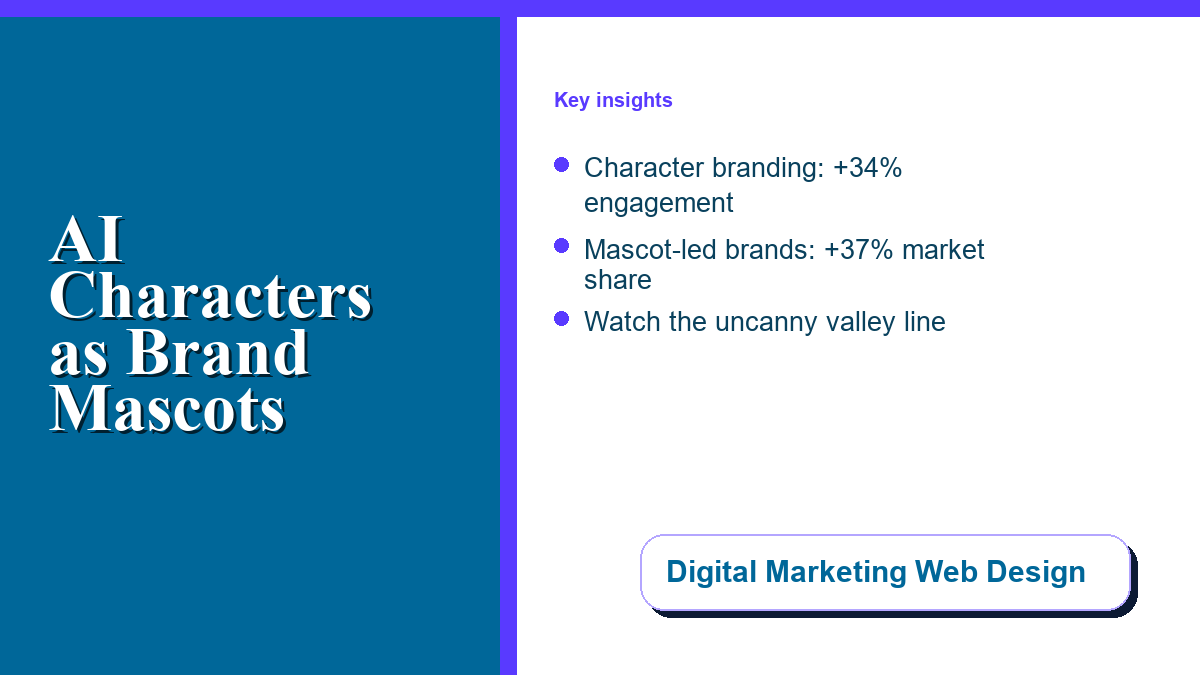
Companies with strong character branding report a 34% lift in customer engagement and a 41% boost in new users compared to competitors without one, and mascot-led brands see roughly 37% more market share along with a meaningfully stronger emotional connection than mascot-free peers in the same category. A character gives a customer something to relate to that a logo alone never could — and an AI-driven one can now hold an actual conversation instead of just appearing in an ad.
What Changed With AI
AI-powered brand characters give a business full control over tone, constant availability, and dramatically faster content production than a traditional mascot campaign ever allowed — no animation studio, no voice actor booking, no waiting weeks for a new asset. A brand character can now answer a customer’s actual question in its own established voice rather than just decorating a page while a separate support system handles the real interaction.
The Line Businesses Need to Watch
Not every audience responds well to this. Some consumers report real unease with AI-driven brand personas, and the uncanny valley effect is a genuine risk — a character that reads as slightly too human-like can create discomfort instead of connection. The mascots performing best in 2026 lean into visible, authored design choices rather than machine-smoothed photorealism: personality and a bit of stylistic imperfection read as more trustworthy than a character trying too hard to pass as real.
What an AI Brand Character Actually Needs to Work
- A consistent personality, not just a consistent look. A character customers can predict the tone of is more useful than one that’s only visually consistent.
- Real memory of returning customers. A character that “remembers” a repeat customer’s preferences reads as genuinely attentive rather than scripted.
- Boundaries on what it actually handles. A brand character answering FAQs and handling light engagement is different from one making commitments a business has to honor — know which one is being built before launch.
Platforms built specifically around creating a persistent, editable AI character are a more natural fit for this than a general chatbot repurposed for the job. Charigent’s approach to building a Character for your brand is built around exactly that use case — a persona with real memory of who it’s talking to, not just a scripted response tree wearing a mascot’s name.
Where to Start
A business considering this doesn’t need to launch a fully autonomous brand persona on day one. A narrow pilot — one channel, one clearly defined job, real customer feedback before expanding — catches the uncanny-valley and tone-mismatch problems while the cost of being wrong is still small.