

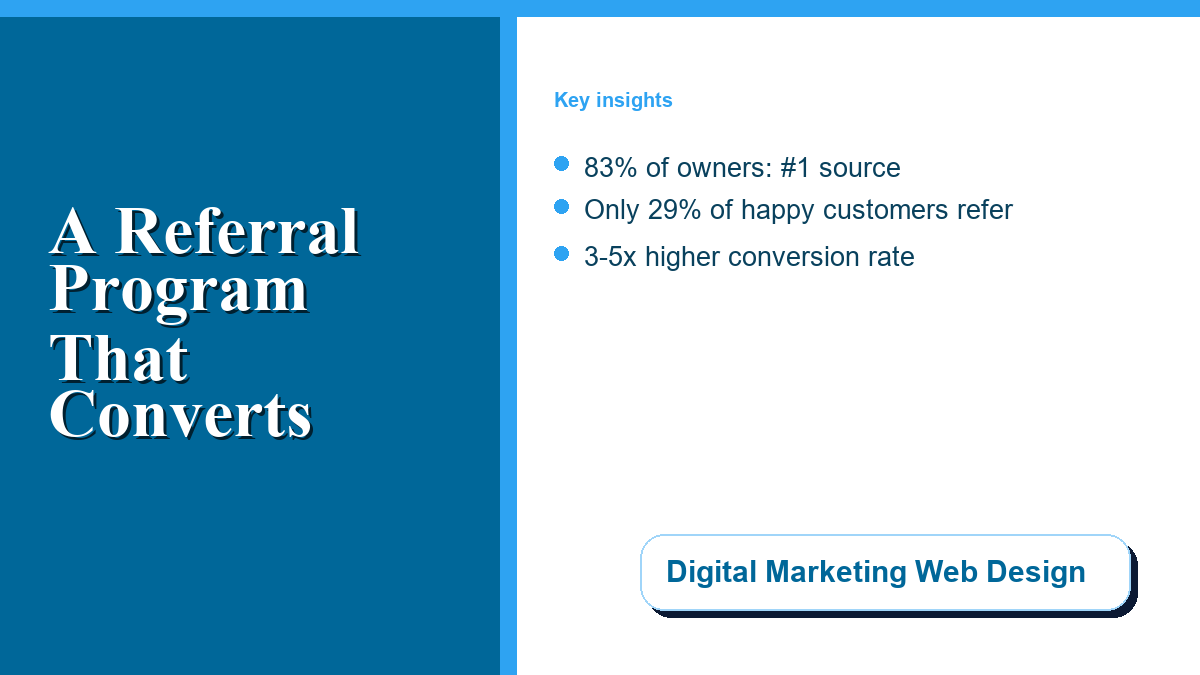
Small business owners consistently name referrals as their single largest source of new customers — 83% put it at the top of the list, ahead of paid ads, social media, and everything else combined. And yet most of those same businesses run their referral process entirely informally, hoping happy customers mention them rather than building a system that makes it easy and worthwhile to do so. The gap between “customers would refer us” and “customers actually do” is exactly where a real referral program pays for itself.
Table of Contents
The Gap Is Bigger Than Most Owners Realize
Roughly 83% of satisfied customers say they would refer a business they like. Only about 29% actually follow through without being asked. That 54-point gap is not a loyalty problem — it is a friction and prompting problem, and it is the single easiest thing a small business can fix without spending anything on paid acquisition.
Why the Economics Work
Referred customers are not just easier to acquire, they are better customers: on average they carry a 16% higher lifetime value, spend 25% more on their first purchase, and retain at a rate roughly 37% better than customers who arrive through any other channel. Referral-driven acquisition also runs 3–5x higher conversion than colder channels, while cutting acquisition cost by around 25% — because a referred customer already trusts the business before they ever see the offer. That trust effect is well documented: 84% of consumers say they trust a recommendation from someone they know over any form of advertising, and referred leads convert at roughly four times the rate of an unreferred one.
What Actually Moves the Needle
Not every referral program performs the same, and the difference is almost always design, not incentive size:
- Reward both sides. Programs that give something to both the referrer and the new customer see about 29% higher participation than one-sided programs.
- Keep it simple. A referral process with one clear step converts roughly 2.6x better than a multi-step program with conditions and tiers.
- Make the link personal. A referral link tied to the specific customer, not a generic code, performs about 34% better — people share things that feel like theirs.
- Ask at the right moment. The best time to ask is right after a customer has a good experience, not in a generic monthly email unrelated to anything that just happened.
- Follow up. A simple reminder after the initial ask lifts completion rates by around 47% — most customers who intend to refer someone simply forget.
Getting Started Without Overbuilding It
A small business does not need referral software to start. A dedicated discount code, a short thank-you email template sent after a good review or a repeat purchase, and one clear reminder a week later covers most of what the data above actually recommends. The mistake to avoid is treating referrals as something that happens on its own — the businesses converting at 3–5x are the ones that built a small, repeatable system instead of waiting for word of mouth to happen by accident.
For a broader look at why this channel outperforms almost everything else a small business can invest in, see our rundown of the benefits of incentive marketing, which covers the wider case for building rewards into how a business earns new customers.