

Buying links has gotten riskier, not safer, in 2026. Google’s spam enforcement has gotten sharper at spotting manufactured link patterns, which means the gap between a link-building service that genuinely helps a site and one that quietly puts it at risk has never mattered more — and from the outside, both kinds of service can look identical in a sales pitch.
Table of Contents
The Question That Actually Predicts Quality
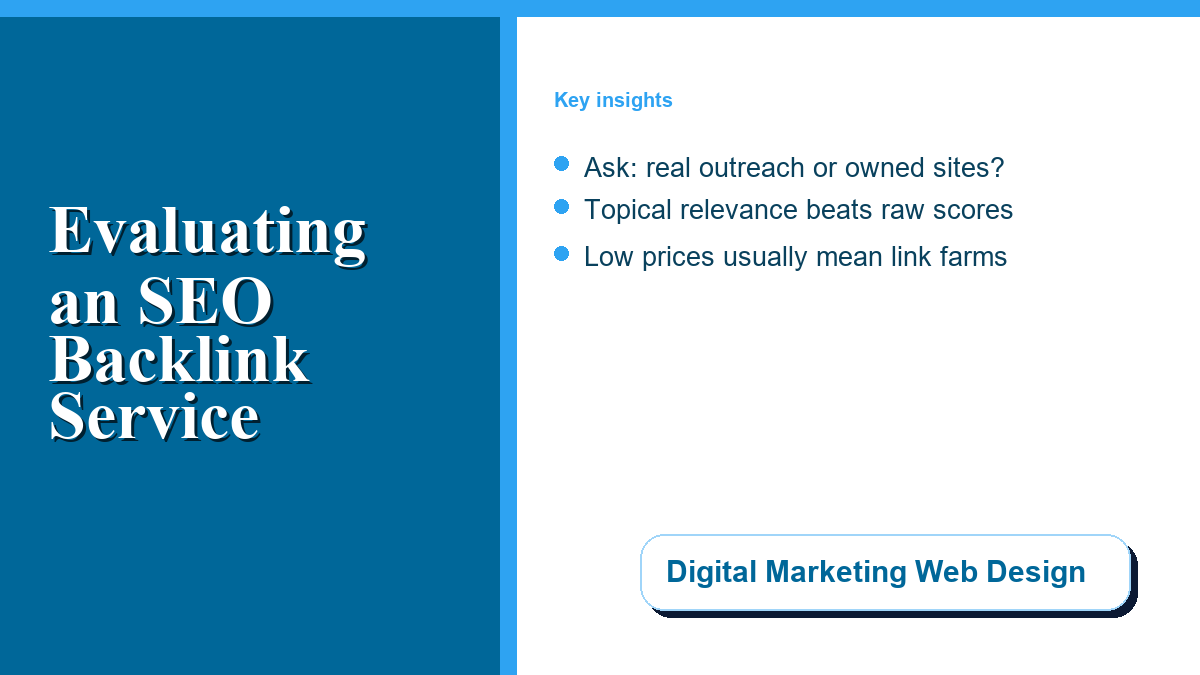
Before comparing metrics or prices, the one question worth asking a vendor directly is whether they are doing real outreach to real publications, or whether they own the sites the links come from. Topical relevance is the priority for links in 2026 — a link needs to come from a site whose audience would plausibly care about the linked page, not just a site with a high authority score.
Why a High Score Can Still Be a Bad Link
A site with an impressive-looking authority metric sitting on a server cluster tied to a known link network is worth less than a much smaller, genuinely independent publication with a consistent editorial history and real authorship — even though the bigger number looks more impressive on a report. A legitimate service is selling outreach work and editorial relationships. If a price feels too low for what outreach and editorial placement actually cost, that is usually because the price is for the link itself, not the work behind it — and that is the line between white hat and the kind of link farm Google actively penalizes.
Red Flags Worth Walking Away From
- Suspiciously low per-link pricing. Real editorial placement takes real time; a link priced like a commodity usually is one.
- A “black box” process. A legitimate vendor will show exactly which sites your links are going on before publication, not after.
- No mention of topical relevance. If a vendor’s pitch is entirely about a metric score and never about whether the site’s audience actually overlaps with yours, that is a gap worth asking about directly.
- Case studies that only show a 30-day spike. Sustainable link building shows up as gradual, durable growth, not a short-term jump that fades once the campaign ends.
What to Ask For Before Signing
Ask for sample placements from the last 90 days, and check them yourself: is the linking page genuinely about a related topic, does it read like it was written for readers rather than for the link, and is the site still indexed and ranking for anything. A vendor confident in their process will not hesitate to share this. One that gets vague about specific recent placements is telling you something, even if they never say it directly.
For a closer look at how this applies specifically to service-based small businesses evaluating outreach options, our page on niche outreach backlink services covers what a properly vetted outreach process looks like in practice.