

A small business does not need an enterprise communication platform, but “we’ll just use group text” stops working somewhere around five employees, and most small teams cross that line without ever deciding on a real tool. The good news is the 2026 options for a small team are better and cheaper than they used to be — the mistake is usually picking based on brand recognition rather than what the team actually needs.
Table of Contents
If Budget Is the Deciding Factor
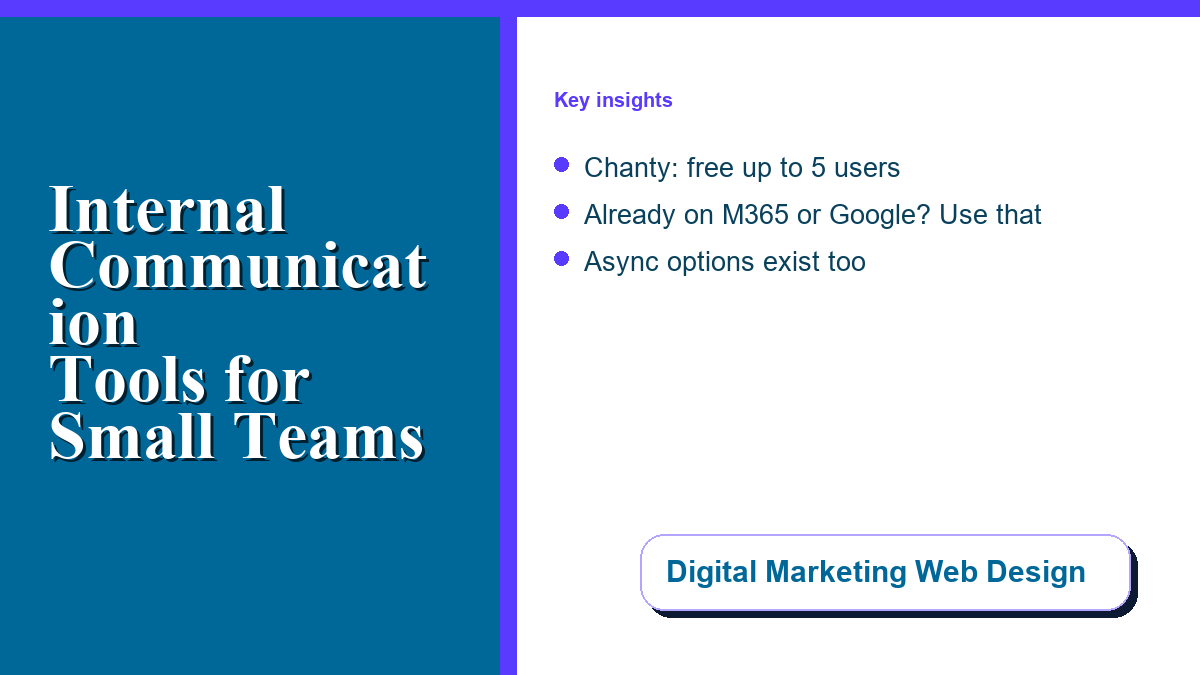
Chanty is free for up to five users and $4 per user per month after that, with a simple interface, unlimited message history, and built-in audio and video calls — a genuinely complete tool for a small team’s core communication needs. Pumble is worth a look for a team that wants something close to Slack’s interface without Slack’s price tag as the headcount grows.
If the Team Is Already on Microsoft or Google
The simplest answer is often the tool a business already has. A team on Microsoft 365 gets the most integrated experience from Microsoft Teams, and a team on Google Workspace gets the same from Google Chat — both come bundled with the productivity suite most small businesses are already paying for, so there is no separate subscription to add.
If Real-Time Chat Is Not Actually the Goal
Not every team benefits from another place to get interrupted. Twist, from the makers of Todoist, is built around asynchronous, organized threads instead of a constant live chat feed — a better fit for a small remote team that wants less real-time noise and more focused, findable conversations that do not require being online at the same moment as everyone else.
If Data Control Matters
A business in a regulated industry, or one that simply does not want its internal conversations sitting on a third party’s servers, has real options: Mattermost and Rocket.Chat are both self-hostable, open-source platforms built for teams that need to keep their communication data under their own control rather than a vendor’s.
Choosing Without Overthinking It
The right tool is the one the team will actually use consistently, which usually means matching it to the team’s existing habits rather than chasing the most feature-rich option on the market. For a wider look at how internal communication tools fit into a company’s broader collaboration stack, see our guide to internal social networks for companies, which covers the category this decision sits inside.