

“Intranet” and “internal social network” get used interchangeably, and the confusion costs businesses real money when they buy one expecting the other. They solve genuinely different problems, and knowing which one a growing team actually needs prevents a subscription nobody ends up using.
Table of Contents
What a Traditional Intranet Actually Is
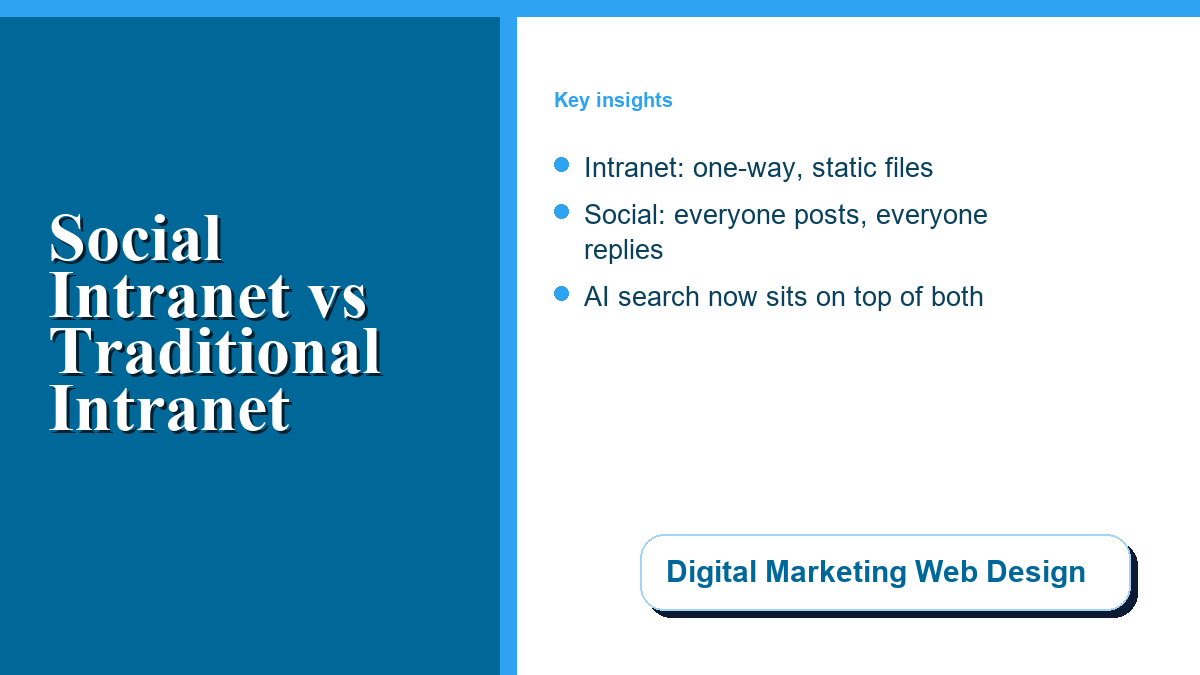
A traditional intranet is a document store with one-way announcements — a place to publish the employee handbook, post a company-wide memo, and file forms. Authorship is restricted to a small group of editors, and everyone else is a reader. That model works fine for a business that genuinely just needs a central filing cabinet with a login screen.
What a Social Intranet Adds
A social intranet keeps everything a traditional intranet does and adds two-way participation: comments, likes, shares, and conversation threads, the same interaction patterns people already know from consumer social platforms. Authorship opens up too — instead of a handful of designated editors, everyone on the platform can post and everyone can respond, which turns the platform from a static library into an actual connected workplace.
The Real Difference Is Design Philosophy, Not Features
A traditional intranet is built around information distribution — getting the right document to the right person. A social intranet is built around people — humanizing a workplace that might otherwise be entirely distributed or remote, where a shared physical space used to do that job informally. That’s not a minor distinction; it changes what kind of team actually benefits from the switch.
What’s Different About 2026 Platforms Specifically
- AI-powered search and summaries now sit on top of most modern platforms, surfacing an answer directly instead of a list of documents to search through manually.
- Personalized content feeds mean different employees see different priority content, rather than one identical company-wide feed everyone scrolls past.
- Mobile-first design matters more than it used to — frontline and distributed staff who never sit at a desk need the same access as office-based employees, not a stripped-down mobile afterthought.
Choosing Between Them
A small, co-located team with low turnover and simple documentation needs is often genuinely fine with a traditional intranet — the social features solve a problem they don’t have. A growing, distributed, or fast-hiring team benefits from the social layer specifically because it replaces the informal hallway knowledge-sharing that a bigger or more dispersed team structurally loses. For a broader look at where these tools fit and which specific platforms suit which team size, see our guide to internal social networks for companies.