

A new business app gets added to the stack the same way most of them do: someone saw a recommendation, signed up for the free trial, and started using it before anyone asked whether it actually belonged there. Six months later, half the team has stopped logging in and nobody remembers to cancel it.
Table of Contents
The Questions That Actually Matter Before Signing Up
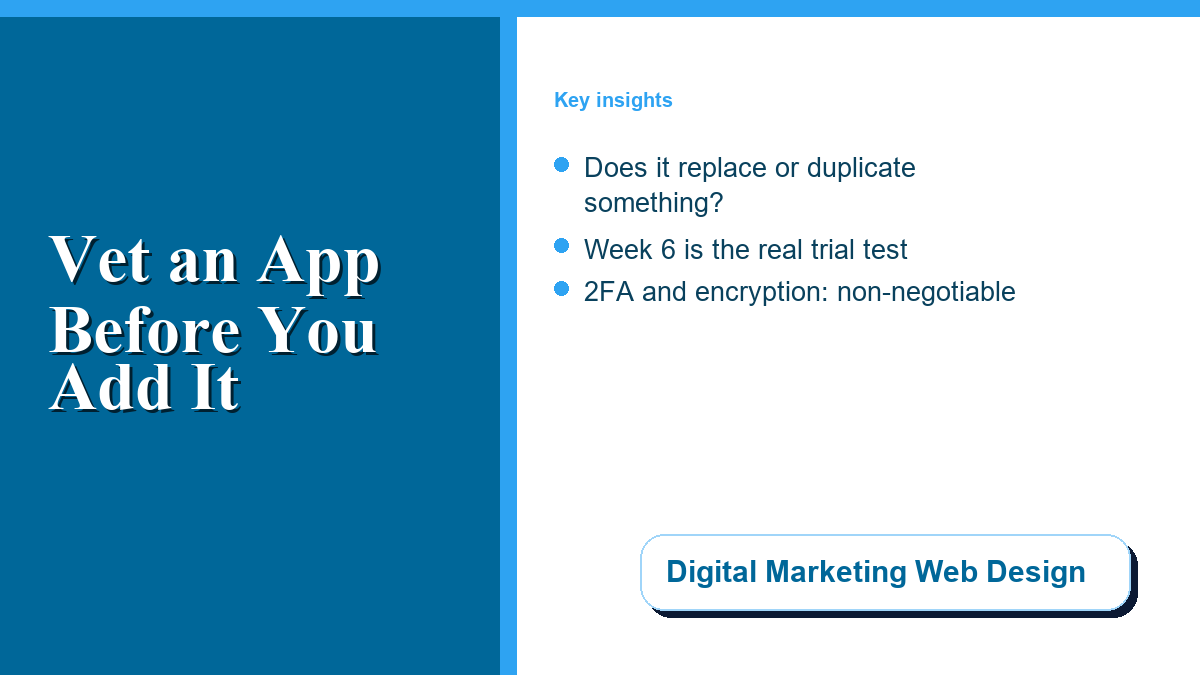
Before adding any app to the stack, four questions catch most of the mistakes: Does it replace something already in use, or add a new category entirely? Who on the team will actually be responsible for keeping it updated? Does it integrate with what’s already there, or does data need to be manually copied between systems? And what does canceling it actually look like — is customer or business data portable, or does it stay locked in?
The Free Trial Trap
A free trial is designed to get a business through the setup friction, not to reveal whether the tool earns its place after the novelty wears off. The real test is week six, not day one — is the team still opening it without being reminded, or has it quietly slid back into the old workaround it was supposed to replace? An app nobody has to be told to use is doing its job; one that requires constant reminders is a sign the workflow around it was never actually fixed.
Security Deserves a Real Look, Not a Skim
Encryption and two-factor authentication should be treated as non-negotiable for any app touching customer or company data — not a nice-to-have checked off after the decision is already made. A business advertising app that touches customer contact information or payment details is a vendor with real access to sensitive data, and it deserves the same scrutiny a business would apply to any other vendor in that position.
Watching for Overlap
The most common stack mistake isn’t picking a bad app, it’s picking a good app that duplicates something already in use under a different name. Before adding anything new, a quick audit of the current stack against what the new tool actually does catches this more often than most owners expect — overlapping subscriptions are common enough that a periodic stack review is worth doing on its own, independent of any specific new tool under consideration.
Making the Call
An app earns a permanent place in the stack when it removes a specific, named friction point — not because it’s popular or a competitor uses it. For a closer look at the specific categories worth evaluating first, see our guides to business advertising apps for small business promotion and essential apps to grow your business and acquire clients for free.