

Customers have gotten good at telling the difference between a brand that means what it says and one that’s decorating a sales pitch with values-sounding language. Understanding what actually earns that trust — and what quietly destroys it — matters more than getting the wording of a mission statement exactly right.
Table of Contents
The Trust Premium Is Real and Measurable
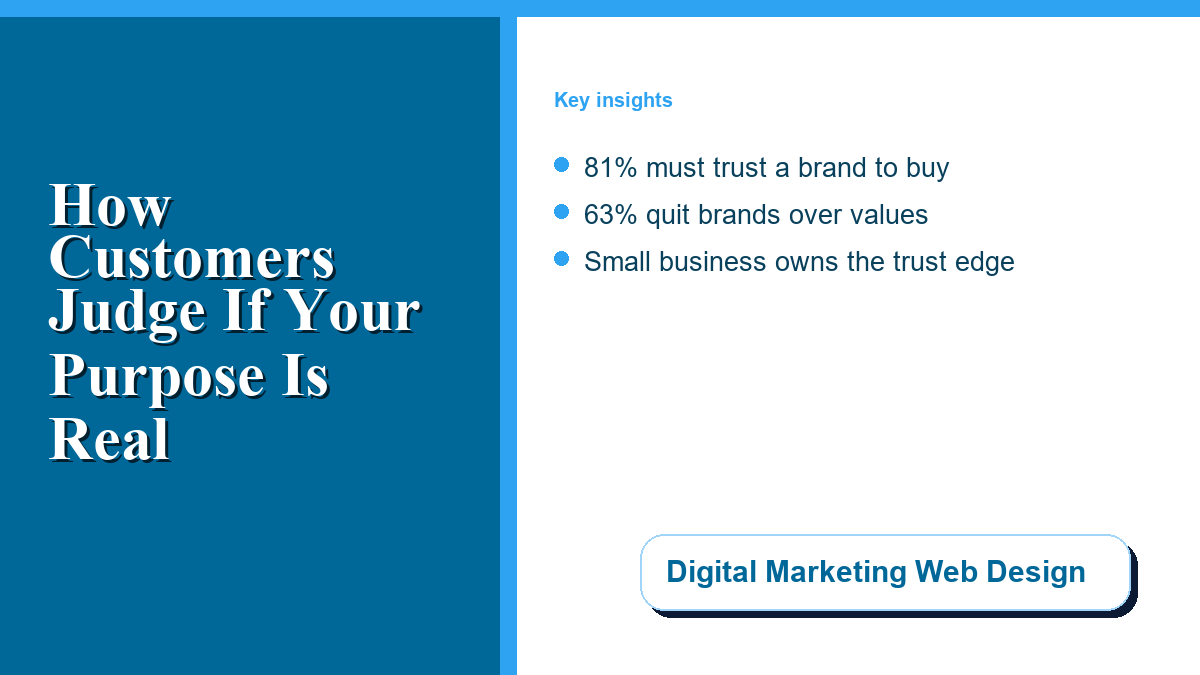
81% of consumers say they need to trust a brand before buying from it, and companies ranking in the top quartile on brand trust deliver measurably better business results — higher customer lifetime value, lower acquisition costs — than bottom-quartile performers. Purpose isn’t a soft marketing exercise sitting apart from the numbers; it’s one of the clearest levers a business has over long-run economics that don’t show up in a single campaign’s metrics.
What Actually Signals a Real Purpose to Customers
Customers do not evaluate purpose from the statement on the About page — they evaluate it from whether the business’s actual behavior matches what it claims to stand for, especially in moments that cost the business something. A refund policy that’s easy to use when a customer is upset is a stronger purpose signal than any paragraph of copy, because it’s a claim the business is actually paying for in the moment it matters.
The Trust That Gets Destroyed Fastest
63% of consumers report permanently cutting ties with a brand over the past year specifically because of a values or ethics concern — not a product failure, a values failure. That number is the flip side of the trust premium: purpose-related trust is asymmetric, built slowly through consistent action and lost quickly through one visible mismatch between what a business claims and what it does when it’s inconvenient.
Where Small Businesses Have a Structural Advantage
Public trust in small business has reached its highest recorded level, with a majority of consumers explicitly citing high-profile large-brand scandals as the reason they now prefer shopping local. That’s not a marketing claim a small business has to manufacture — it’s an existing trust reservoir most small businesses are sitting on without realizing it, simply because they’re small, local, and harder to fake purpose at scale the way a large corporation’s PR department can.
Putting This Into Practice
The businesses earning the real version of this trust premium aren’t writing better purpose statements — they’re making sure day-to-day operational decisions, especially the inconvenient ones, actually reflect what the statement claims. For the practical framework on developing a purpose that can survive that test, see our guide to how to develop your brand’s purpose to strategically achieve your goals.